🔊 Listen to the story
Click Read to hear the story aloud. You can pause or stop at any time.

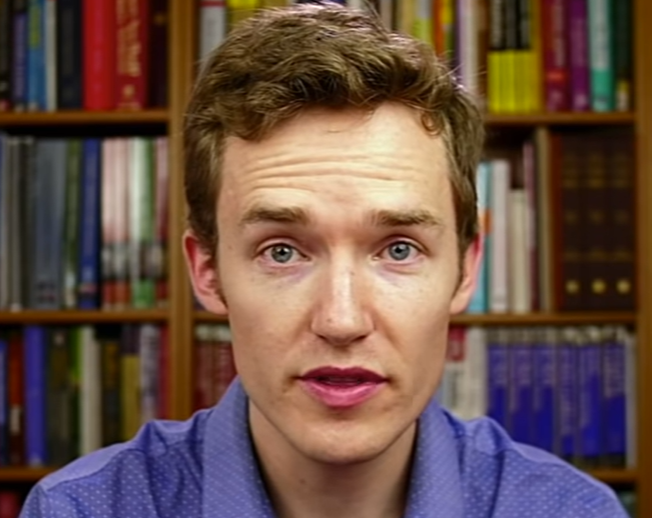 Grant Sanderson - Creator of "Essence of Calculus" in 3Blue1Brown in You Tube

Newton and Leibniz Develop Calculus
A long time ago — way before rockets, cars, or TikTok — people saw things move but didn’t really understand how they moved. They knew rocks roll downhill. They knew apples fall. They knew rivers curve and shadows stretch. But nobody knew how to describe exactly how fast things were changing.
Then one afternoon in the 1660s, a young student named Isaac Newton sat under an apple tree to rest. He was home from school because of the plague, and he was tired from studying. And yes — as the kids always ask — an apple really did fall and hit him on the head.
Newton rubbed his head and suddenly wondered: “Why did the apple fall faster and faster as it got close to the ground?” Why didn’t it fall at one steady speed? That tiny question opened the door to one of the biggest ideas in math and science.
Newton started drawing curves — little hills and loops — in his notebook. He noticed that if he drew a tiny straight line touching the curve at just one point, that line told him how steep the curve was right there. That little line is called a tangent. And the steepness of that line is called the slope. Newton realized: slope = the story of how something is changing at that moment.
Meanwhile, in Germany, another brilliant thinker named Gottfried Leibniz was exploring a different big idea. Instead of looking at change, he studied how things add up — the area under a line, or how far something travels when its speed keeps changing. He sliced shapes into super-tiny strips, added them up, and invented the symbol ∫, which means “lots of little pieces added together.”
Newton’s idea was about changes. Leibniz’s idea was about accumulation. Together, they became the two great sides of calculus. Today, you get to follow in their footsteps. When you draw a tangent line at the point (3, 9), you are doing exactly what Newton started. You’re finding the slope — the secret of the curve. And when you shade the area under a line, you’re doing what Leibniz did — discovering how little pieces add up to something big.
By the end of today, you’ll know something amazing: Lines and curves tell stories; Slopes tell how fast things change; Areas tell how things accumulate; And calculus is the language that helps you read it all.