🧩 Adventure 14 — Activity 1
2) Key Equations and Derivation
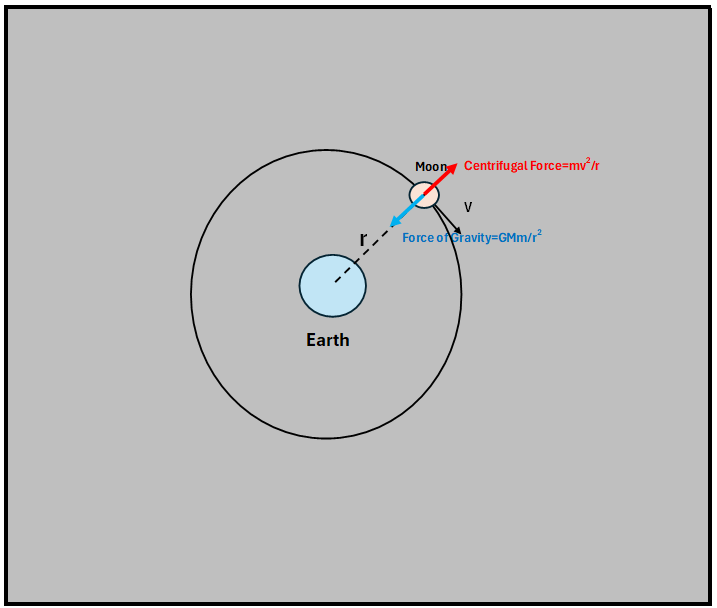
The Moon stays in orbit because gravity provides the inward force required for circular motion.
Newton’s gravitational force: F = GMm / R²
where G is the gravitational constant, M is Earth’s mass, m is the Moon’s mass, and R is the Earth–Moon distance.
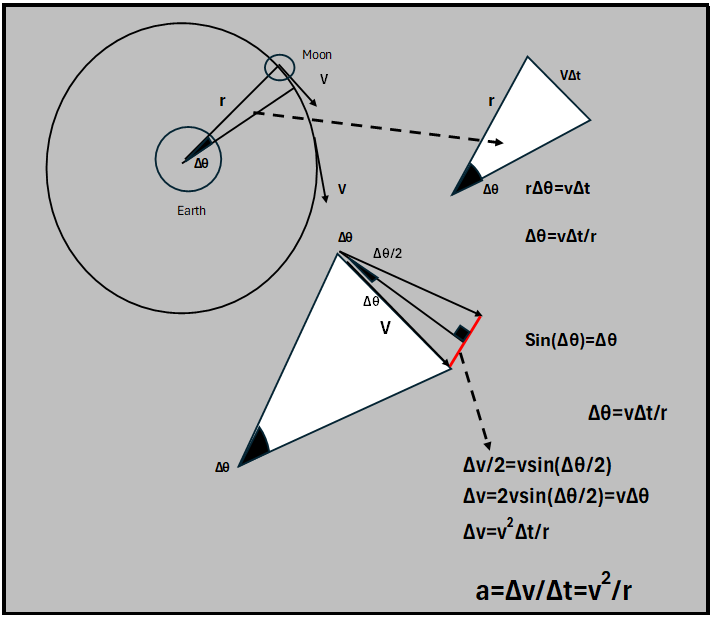
Circular motion requirement: F = mv² / R
Since gravity is the force that keeps the Moon in circular motion, we set the two expressions equal:
GMm / R² = mv² / R
Cancel m and multiply both sides by R:
GM / R = v²
Therefore the orbital speed is:
v = √(GM / R)
3) Compute the Moon’s Orbital Speed
Use these values:
- G = 6.67 × 10⁻¹¹ N·m²/kg²
- M = 5.97 × 1024 kg
- R = 3.84 × 10⁸ m
Substitute into v = √(GM/R) and compute the Moon’s speed in m/s.
Convert your result to km/s.
4) Compute the Orbital Period
The Moon travels one full circle in one orbit, so first compute the circumference:
distance = 2πR
Now use:
time = distance / speed
Orbital period in seconds:
Convert the result into days.
5) Interpretation
Why does the Moon not crash into Earth?
What would happen if the Moon moved more slowly?
What would happen if the Moon moved more quickly?
1) The Big Idea
Complete the sentence in your own words:
The Moon stays in orbit because